Everyone asks the same question when they launch a website: now what? You’ve built it, you’ve paid for it, and it’s sitting there getting maybe a dozen visits a month from your mum and a bot from Russia.
Getting traffic isn’t one thing. There are four routes, each with real trade-offs, and the businesses that grow fastest tend to use more than one at a time.
Post on social media
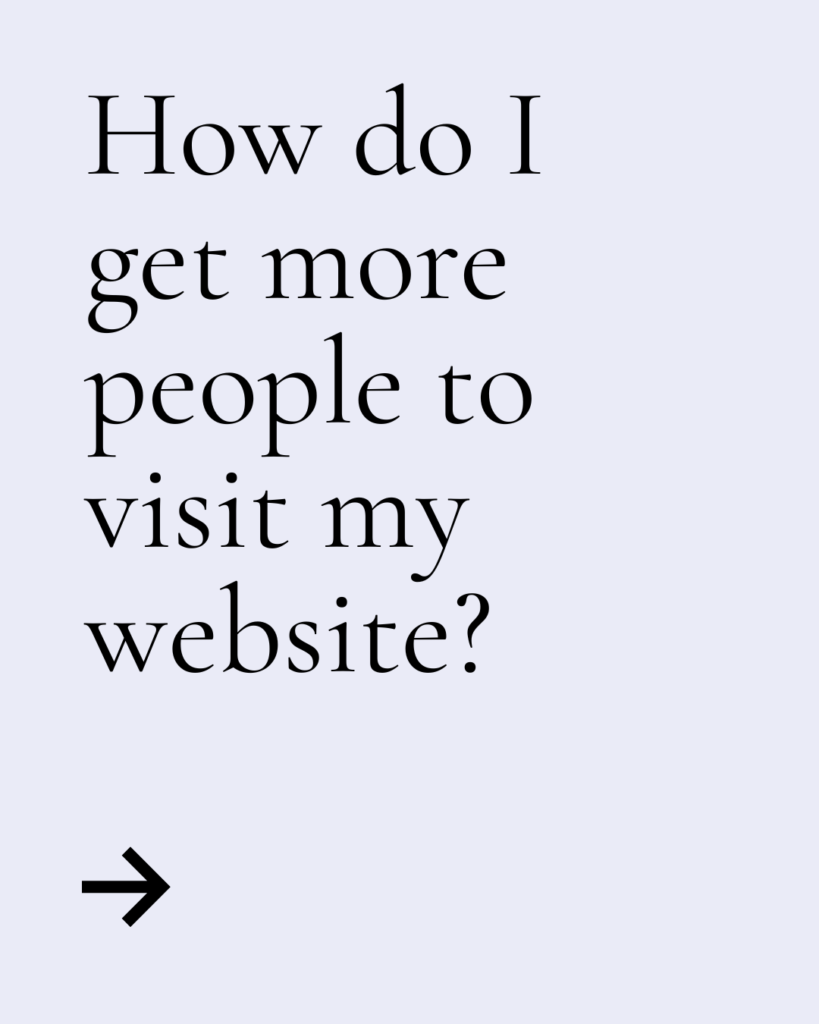
Instagram, TikTok, LinkedIn – organic content is the slowest burn and the most underestimated. When it works, it sends people to your site who already trust you before they arrive. A video that lands can drive more clicks in a day than a month of ad spend.
The catch is that it requires consistency and patience, and neither of those are free. Most people post a handful of times, see nothing happen, and stop. The algorithm rewards accounts that keep showing up, so the businesses that win at organic are the ones who treat it like a utility bill — boring, regular, non-negotiable.
If you’re starting out, pick one platform and post three times a week for three months before you judge it.
Run ads
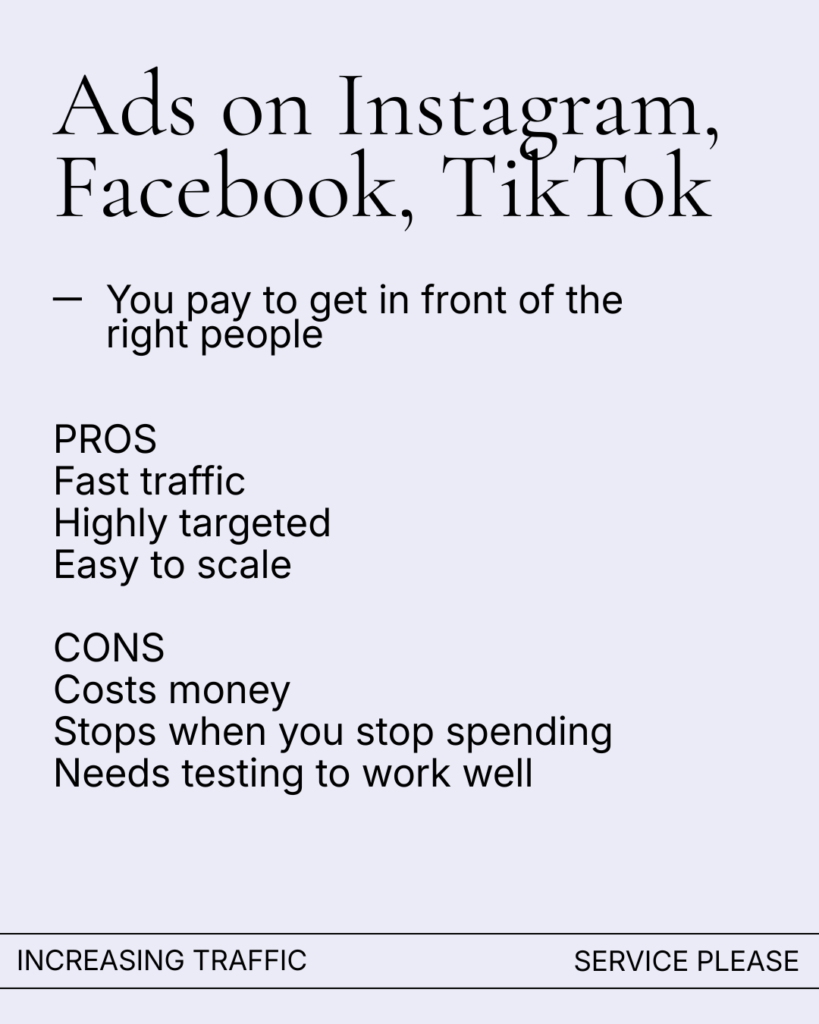
Paid ads on Meta, Instagram, or TikTok solve the patience problem. You put money in, people show up the same day. For a new business trying to test a message or offer, that speed is genuinely valuable.
The limitation is obvious: stop paying, stop getting traffic. Ads also need time to optimise — a campaign in week one rarely performs as well as the same campaign in week four once the algorithm has found your best audience. Budget for testing, not just running.
The sweet spot for most small businesses is £5-£10 a day, two ad variants, six weeks of data before drawing conclusions.
Show up on Google
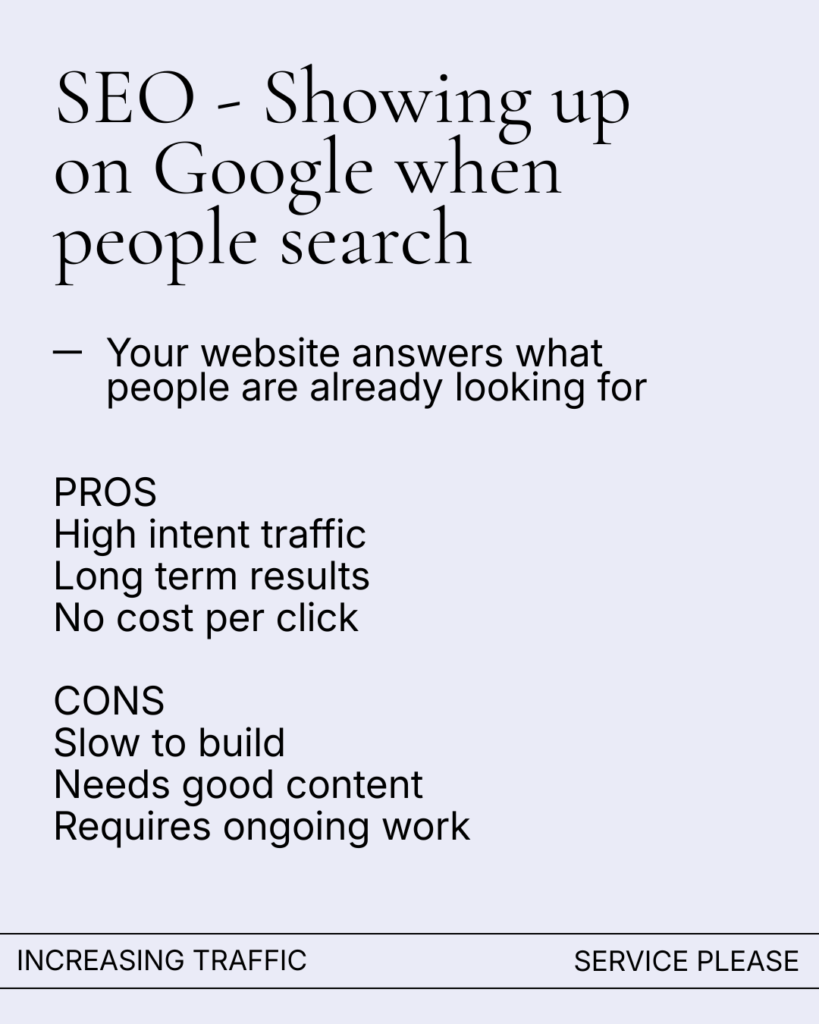
SEO is the long game. When someone searches “web designer London” or “small business social media help”, you want your site to appear. People who find you through search are already looking for what you sell, so they convert at a much higher rate than cold social traffic.
The trade-off is time. A new site typically takes three to six months before Google starts ranking it for anything meaningful. You need good content, a fast-loading site, and ideally other websites linking to yours.
A blog helps significantly here, which is exactly why you’re reading this.
Offline: leaflets, posters, QR codes
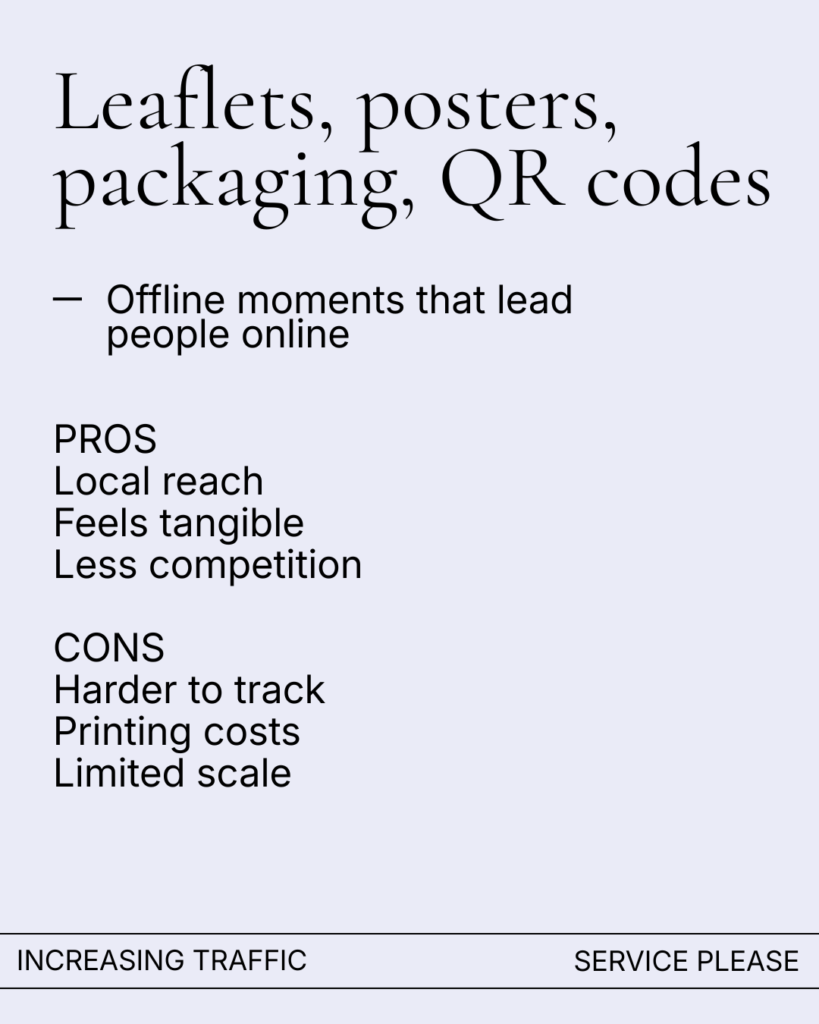
Offline marketing gets overlooked because it’s harder to measure, but it has one advantage the digital channels don’t: less competition. A well-placed poster in a local coffee shop or a QR code on your packaging puts you in front of people who aren’t scrolling past ten other businesses at the same time.
The QR code matters. Without it, offline activity is almost impossible to track. With it, you can see exactly how many people scanned it and what they did on your site.
What actually works
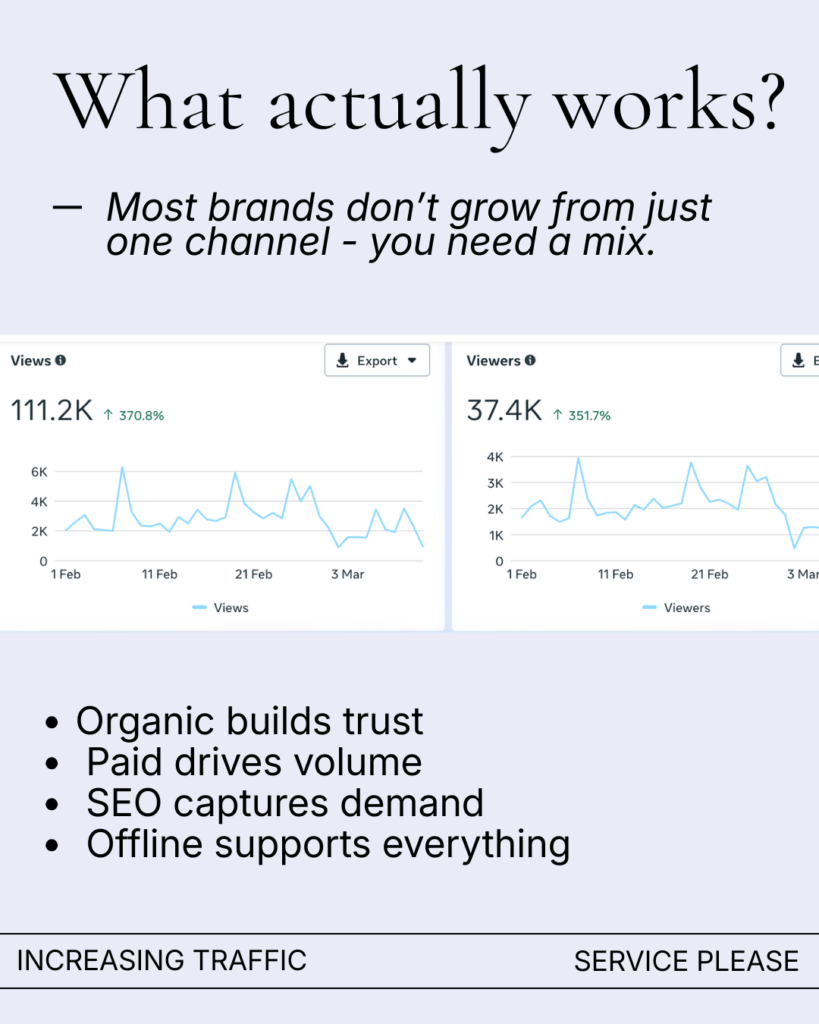
The honest answer is: a combination. Organic content builds the trust that makes people click your ad. The ad drives people to a page that ranks on Google. The blog post that ranks on Google gets shared on Instagram. They feed each other.
Pick the channel that fits your time and budget right now and do it properly. Add the next channel when the first one is running without you thinking about it every day. Businesses that try to do everything at once usually do nothing well.
Start with one. Make it boring and consistent. Then build from there.