How Much Do I Need for Paid Ads?
Paid ads work. They can also drain your marketing budget fast if you go in without a clear picture of what you’re buying. Social media advertising costs vary widely, and most small businesses underestimate what it actually takes to run a successful campaign. Here’s the reality.
The budget reality
The amount you spend on ad spend directly affects how much data you get back. Small budgets don’t just limit reach – they limit your ability to learn. Facebook’s algorithm and Google Ads both need volume to optimise delivery. Spend below a useful threshold and the system never exits the learning phase. You’re paying for data you can’t act on.
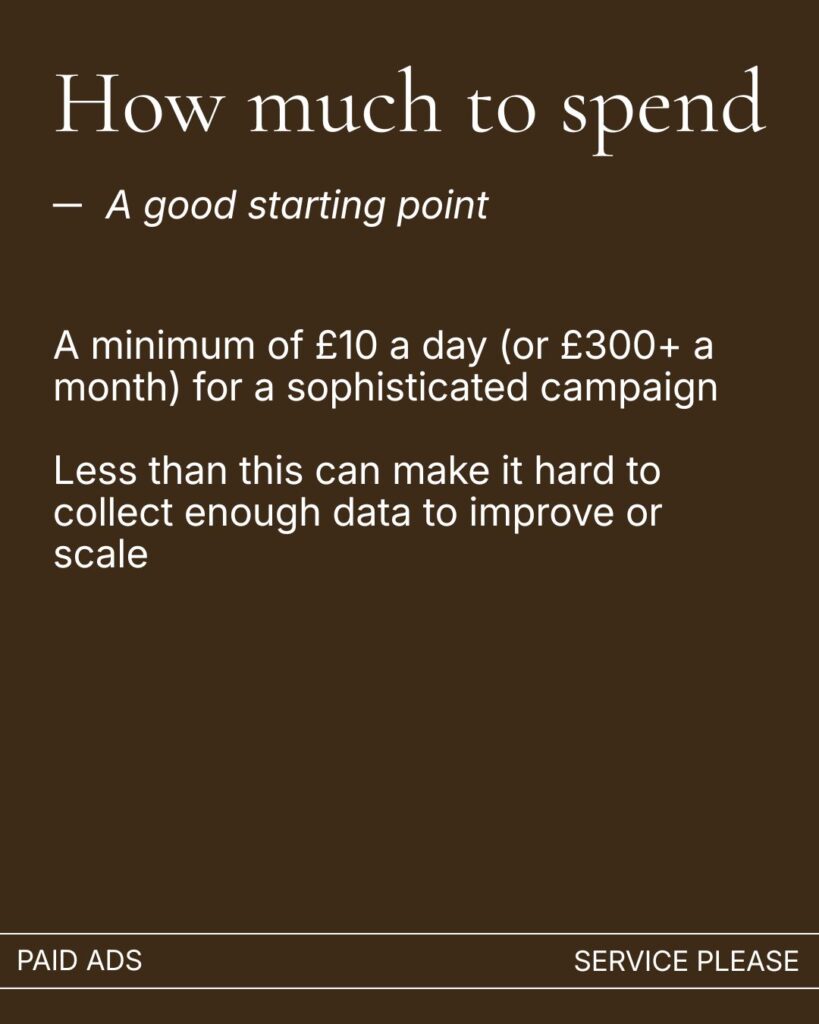
For a full campaign with proper audience targeting and testing, plan for at least £10 a day – around £300+ a month. Below that, you’re collecting insufficient data to know what’s working. UK businesses running lead generation or e-commerce campaigns in competitive industries often need more, but £300 is the floor for a campaign worth learning from.
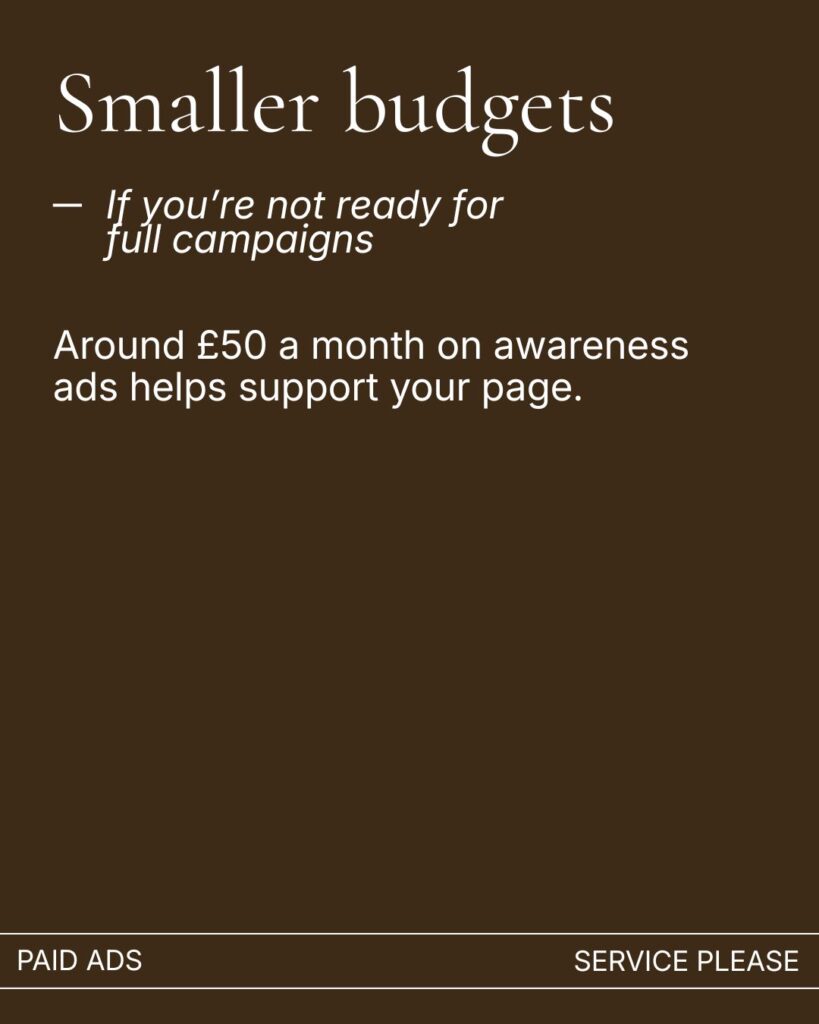
If that’s not on the table yet, around £50 a month on building brand awareness still does something useful. It keeps your page visible, builds a warm audience of existing customers and engaged users, and gives you a pool to retarget once your budget grows.
| Platform | Minimum daily budget | Average CPC (UK, 2026) | Best for |
| Facebook Ads | £1/day (low), £10+/day (useful) | £0.50–£1.50 | Consumer brands, local businesses |
| Instagram Ads | £1/day (low), £10+/day (useful) | £0.60–£2.00 | Visual products, younger demographics |
| Google Ads | £5–£10/day recommended | £1.00–£4.00+ | Search intent, lead generation |
| LinkedIn Ads | £10/day minimum | £4.00–£8.00 | B2B, job title targeting |
Ads are slow at the start
Your first ad campaign probably won’t be your best one. Social media ads need time to exit the learning phase, find the right audience, and generate enough clicks and conversions for the platform to optimise ad placements. Most businesses need to test two or three ad creatives and angles before one takes off – different hooks, different visuals, different campaign objectives.
Facebook charges you each time your ad appears in the ad auction, and early on, before the algorithm has sufficient data, it bids less efficiently. That means your cost per click (CPC) is often higher in the first two to four weeks than it will be at month three. Pulling the campaign early means you paid for the expensive learning period without getting the benefit of it.
Build that expectation in before you launch. Give each test at least a week of spend and a clear metric – website visits, form fills, purchases – before you draw conclusions.
Consistency matters more than most businesses expect
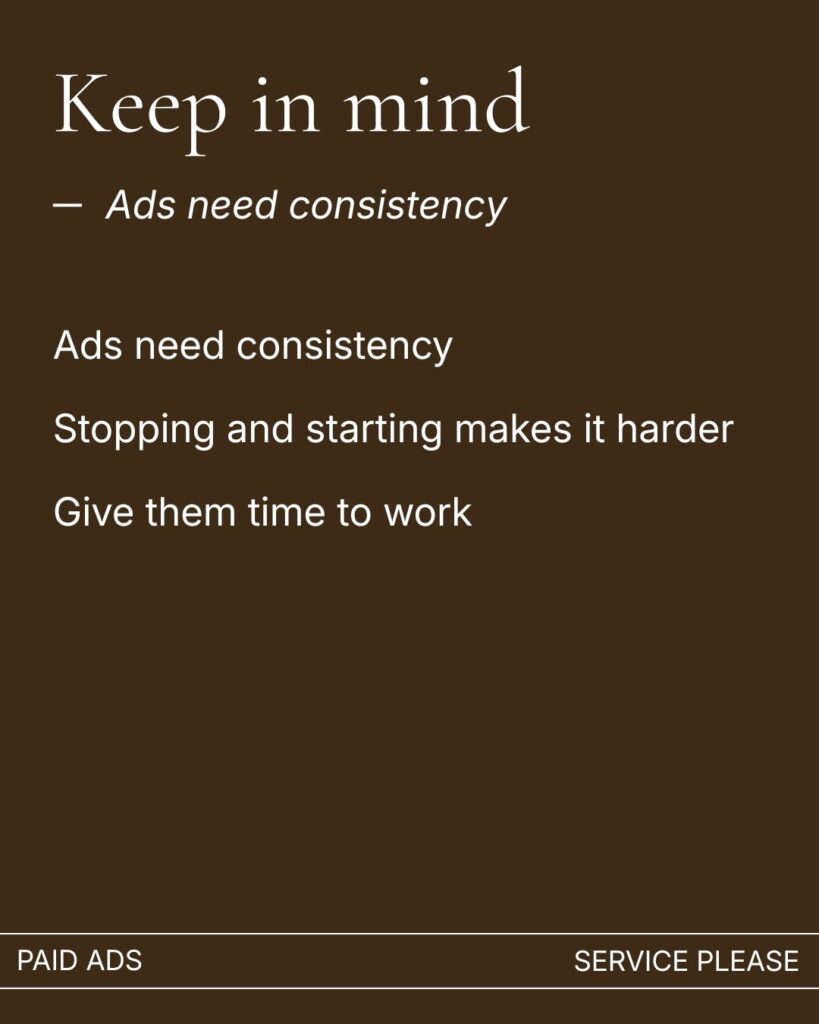
Stopping and restarting campaigns resets the learning process. Every time you pause your Facebook ads for a few weeks and restart, you’re back near zero. The ad account loses the data it built. Bid strategy efficiency drops. You pay more per result while the algorithm relearns.
Ads reward the businesses that stay in the game across multiple touchpoints over months, not the ones who run a burst and drop out. Commit to a daily budget you can sustain. A steady £300 a month for six months teaches you far more than £1,800 spent in one go – and produces better results by month four.
What actually affects social media advertising costs
Several key factors determine what you pay in the ad auction. Ad quality scores matter: a relevant ad with high click-through rates costs less to run than a weak one targeting the same audience. Audience targeting tightens or widens your competition pool. Campaign setup, including your bid strategy and lifetime budget versus daily budget, changes how Facebook or Google paces your spend.
Competitive industries – legal, finance, recruitment – face higher costs because more advertisers compete for the same audience. A local café and a national insurance brand both want to reach 30–45 year olds in Manchester, but the insurance brand bids harder. Your ad set sits in that same auction.
Ongoing optimisation – refreshing ad copy, testing new ad creatives, adjusting audience targeting – keeps costs lower over time. Set it and forget it is the most expensive way to run paid social.
FAQ
Do I need a big budget to start? No, but you need a realistic one. £50 a month supports brand awareness campaigns on social platforms. For a full campaign with testing, audience targeting, and sufficient data to optimise, £300+ a month is where social media ads start working properly.
How long before I see results? Most ad campaigns take four to eight weeks before the data gets useful. Some ads find their audience faster, some slower. The first month is largely the algorithm learning – resist the urge to switch everything off before it has run long enough to tell you anything.
Which platform should I advertise on? It depends on your business goals. Facebook ads and Instagram ads work well for most consumer-facing UK businesses and offer strong local audience targeting. Google Ads suits businesses where customers are actively searching – trades, services, specific products. LinkedIn Ads cost more per click but reach B2B audiences by job title and industry. If you’re unsure, Meta is the simpler place to start for most small businesses.
Can I run ads myself or do I need an agency? You can set up basic campaigns in Ads Manager yourself, and for lower budgets it often makes sense to. As total ad spend increases, poor campaign setup costs more than an agency would charge. A badly structured £1,000/month campaign can waste £400–£500 of that through weak audience targeting, low ad quality scores, or a bid strategy that doesn’t match your campaign objectives.
What if my ads aren’t working? Change one thing at a time. Test a different image, a different headline, a different audience. If you change everything at once, you won’t know what improved performance. Give each variation at least a week of spend before drawing conclusions. If people see the ad but don’t convert, the issue is usually the landing page or the offer – not the ad itself.
How do I know if my Facebook ads are actually working? Decide what success looks like before you launch. A booking, a sale, a form fill – pick one conversion goal and track it, not just reach or impressions. Facebook charge you for ad appearances, not outcomes, so an ad generating clicks but no conversions is telling you something specific about where the funnel breaks.